
Antibody responses are an important component of immunogenicity in gene therapy. When therapeutic genetic material is delivered into the body, the immune system may recognize components of the delivery system or proteins produced following gene transfer. This recognition can lead to the production of antibodies that influence vector activity, treatment outcomes, and the interpretation of immunological findings.
Understanding antibody responses is particularly important in viral vector-based gene therapies, including treatments that use adeno-associated virus (AAV) vectors. Antibodies directed against vector components may affect the ability of a vector to reach and enter target cells. However, not all antibodies have the same biological properties, and their presence does not automatically indicate that a treatment will be ineffective or unsafe.
Antibody testing therefore plays a central role in evaluating immune responses and understanding their potential implications for therapeutic gene delivery.
1. Binding Antibodies: Detecting Immune Recognition
Binding antibodies are antibodies that recognize and attach to specific molecular structures, known as antigens. In gene therapy, these antigens may include viral vector capsid proteins, therapeutic proteins, or other components associated with a treatment.

Binding antibody assays are designed to determine whether antibodies in a biological sample recognize a particular target. Depending on the assay, the results may provide qualitative or quantitative information about the antibody response.
These tests are useful for identifying previous exposure to related antigens and monitoring the development of antibodies following treatment.
However, antibody binding alone does not establish whether an antibody can interfere with the biological activity of a therapeutic vector. Some antibodies bind to a vector without preventing its entry into target cells, while others may affect vector function.
For this reason, binding antibody results must be interpreted according to the purpose of the test and the biological characteristics of the therapeutic product.
2. Neutralizing Antibodies: Evaluating Functional Activity
Neutralizing antibodies are a subset of antibodies capable of interfering with a specific biological function. In the context of gene therapy, neutralizing antibodies against a viral vector may reduce its ability to enter target cells or deliver its genetic cargo.
Their effects depend on several factors, including antibody concentration, binding location, vector characteristics, and the conditions under which the interaction occurs.
Neutralizing antibody assays evaluate this functional activity using defined experimental systems. For example, a cell-based assay may measure whether antibodies in a sample reduce vector-mediated transduction under specified laboratory conditions.
These assays provide information that binding assays alone cannot establish. Nevertheless, neutralization measured in vitro does not always predict the magnitude of an immune response or its clinical consequences in an individual.
Results must therefore be interpreted alongside other laboratory findings and relevant clinical information.

3. Binding Versus Neutralizing Antibody Assays
Although binding and neutralizing antibody assays both investigate humoral immunity, they answer different scientific questions.
Binding antibody assays determine whether antibodies recognize a selected antigen. They can help characterize the presence and magnitude of an antibody response.
Neutralizing antibody assays evaluate whether antibodies interfere with a defined biological function associated with the therapeutic vector or delivery system.
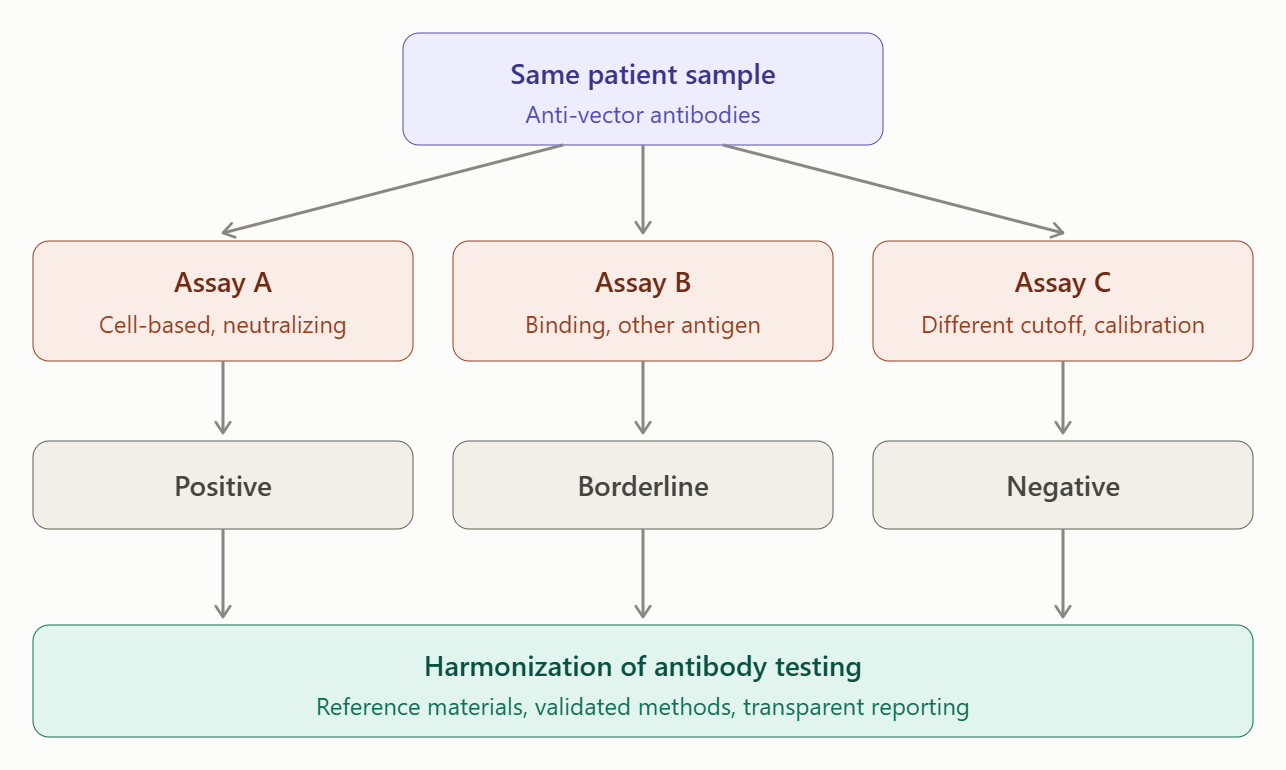
A sample may contain binding antibodies without demonstrating measurable neutralizing activity in a particular assay. Conversely, a neutralizing assay may identify functional interference that cannot be inferred from antibody-binding measurements alone.
The relationship between the two measurements depends on antibody specificity, affinity, concentration, and the experimental methods used.
Using complementary assays can therefore provide a more complete understanding of antibody-mediated responses in gene therapy.
4. Laboratory Methods for Antibody Detection
Several analytical approaches are used to characterize antibody responses. The choice of method depends on the therapeutic platform, the scientific objective, and the intended interpretation of the results.
Enzyme-Linked Immunosorbent Assay
Enzyme-linked immunosorbent assays (ELISAs) can detect antibodies that bind to a selected antigen. The method commonly relies on antigen recognition and an enzyme-linked detection system to generate a measurable signal.
ELISA-based methods can support the assessment of antibody presence and relative or calibrated levels, depending on assay design.
Their performance depends on factors such as antigen quality, sample preparation, assay sensitivity, specificity, and the use of appropriate controls.

Electrochemiluminescence Assays
Electrochemiluminescence-based methods use a measurable light-producing reaction to detect molecular interactions. Depending on the platform and configuration, they can be used to investigate antibody binding and support the characterization of immune responses.
Their analytical performance depends on the assay design, reagents, detection system, and validation procedures.

Cell-Based Neutralization Assays
Cell-based neutralization assays evaluate the functional effect of antibodies on a defined biological process, such as vector-mediated transduction.
These methods can provide direct evidence of functional interference under controlled laboratory conditions. However, results may vary with the cell model, vector system, assay conditions, and method used to quantify the biological response.
Appropriate controls and validated procedures are essential for reliable interpretation.

5. Factors Affecting Antibody Assay Results
Antibody testing is influenced by analytical and biological variables that can affect the reliability and interpretation of results.
Important considerations include:
Assay sensitivity: The ability of a test to detect antibodies at concentrations relevant to the intended application.
Assay specificity: The ability to distinguish the intended antibody response from unrelated binding or interfering signals.
Sample characteristics: Sample quality, handling, storage, and potential interfering substances can influence measurements.
Antigen selection: The molecular target used in a binding assay can affect which antibodies are detected.
Assay format: Different analytical platforms may produce results that are not directly comparable.
Cut points and controls: Validated decision thresholds and appropriate controls help distinguish meaningful responses from background signals.
Timing of sampling: Antibody levels may change over time, making the sampling schedule important when assessing responses before and after treatment.
These factors highlight why assay validation and standardized procedures are essential in gene therapy research.
6. Pre-Existing and Treatment-Induced Antibodies
Antibody responses can arise before or after administration of a gene therapy product.
Pre-existing antibodies may result from previous exposure to naturally occurring viruses or related antigens. For certain viral vector platforms, these antibodies can influence vector availability and biological activity.
Treatment-induced antibodies develop following exposure to the therapeutic product. Depending on their specificity and functional properties, they may recognize vector components or proteins expressed after gene delivery.
The distinction between pre-existing and treatment-induced responses is important when interpreting immunogenicity data. Baseline measurements and follow-up testing may help researchers understand how antibody profiles change over time.
However, the clinical significance of a detected antibody depends on the particular product, the assay used, and the relationship between the laboratory result and relevant treatment outcomes.

7. Clinical Significance of Antibody Monitoring
Antibody monitoring can support the evaluation of gene therapy safety and efficacy, but laboratory findings must be interpreted carefully.
For example, neutralizing antibodies against a viral vector may be associated with reduced vector transduction under certain conditions. Their impact depends on the vector platform, antibody characteristics, dose, route of administration, and other biological factors.
Binding antibodies may provide evidence of immune recognition without demonstrating direct interference with treatment activity.
Similarly, a negative antibody result does not exclude every possible immune mechanism that could influence therapeutic performance.
A comprehensive evaluation may therefore consider antibody measurements alongside cellular immune responses, inflammatory markers, vector-related measurements, gene expression, safety findings, and clinical outcomes.
8. Challenges in Comparing Antibody Assays
Conclusion
Antibody responses are an essential component of immunogenicity assessment in gene therapy. Binding antibodies provide information about antigen recognition, while neutralizing antibody assays investigate whether antibodies interfere with a defined biological function.
Although these measurements are related, they are not interchangeable. Their interpretation depends on assay characteristics, antibody properties, the therapeutic delivery system, and the clinical context.
A structured approach combining validated antibody assays with relevant immunological and clinical information can improve understanding of treatment-associated immune responses.
As gene therapy technologies continue to evolve, reliable antibody characterization will remain important for investigating vector performance, evaluating immunogenicity, and supporting the development of effective therapeutic strategies.